Introduction to SAF: definition, characteristics and relevance
Sustainable Aviation Fuel (SAF) is defined as a "drop-in" replacement kerosene that meets international
aeronautical standards and can be blended with Jet A or Jet A-1 without modifying engines, aircraft or
existing infrastructure. This compatibility makes it the most direct and mature lever to advance the
decarbonization of commercial air transport in the short and medium term (Shahriar & Khanal, 2022; Raji et al., 2025).
Currently, certification under ASTM D7566 standard endorses multiple SAF production pathways. Once blended,
the fuels are recategorized as Jet A/Jet A-1 according to ASTM D1655 standard. In most routes, the allowed
blend is up to 50%, although demonstration flights with 100% SAF have already been conducted, with equivalent
safety and performance results (Braun, Grimme, & Oesingmann, 2024).
Regarding feedstocks and processes, SAF is not a single technology, but a set of diversified routes:
HEFA (Hydroprocessed Esters and Fatty Acids), Fischer–Tropsch (FT), Alcohol-to-Jet (ATJ), and Power-to-Liquid (PtL).
Each pathway offers different emission reductions, with potential for up to 80% lifecycle CO₂ mitigation,
depending on the origin of inputs (used oils, agricultural waste, algae, forest biomass, municipal solid waste, etc.)
and the efficiency of the conversion process (Watson et al., 2024; Liang et al., 2025).
Beyond environmental impact, SAF contributes to energy security by diversifying supply sources and reducing
dependence on oil, which is critical in the face of price volatility and geopolitical tensions (Wandelt, Zhang, & Sun, 2025).
However, its scalability depends on the availability of sustainable feedstocks, the construction of robust logistics chains and
the implementation of effective regulatory policies (Wang, Ting, & Zhao, 2024; Bardon & Massol, 2025).
In this context, international organizations such as the International Civil Aviation Organization (ICAO) and the International Air Transport Association (IATA)
recognize SAF as the main axis for decarbonizing the sector. In fact, it is estimated that this fuel
should contribute around 65% of the necessary reductions to achieve the net zero emissions target by 2050 (Xu et al., 2025; IATA, 2024).
Global context and international commitments (ICAO, IATA, Net-Zero 2050, CORSIA, ETS)
At the international level, the International Civil Aviation Organization (ICAO) adopted in 2022 the aspirational goal of achieving net zero emissions
by 2050, accompanied by the implementation of the CORSIA scheme (Carbon Offsetting and Reduction Scheme for International Aviation), designed to
limit CO₂ growth in international flights through the use of eligible fuels and offset mechanisms. After its pilot phase (2021–2023),
Phase 1 (2024–2026) establishes a baseline threshold at 85% of 2019 emissions, and Phase 2 will be mandatory from 2027 (ICAO, 2024).
In parallel, the industry —through the International Air Transport Association (IATA) and the ATAG's Waypoint 2050 initiative— expects sustainable aviation fuel (SAF)
to contribute around 65% of the reduction needed to meet Net-Zero 2050, especially with an expected acceleration in the 2030s if policies, competitive costs and
feedstock availability converge (ATAG, 2021; IATA, 2024; Wandelt, Zhang & Sun, 2025).
In Europe, in addition to the ReFuelEU Aviation mandate, the EU Emissions Trading System (EU ETS) reserved from 2024 about 20 million emission allowances
(≈€1.6 billion) to cover the cost gap between fossil kerosene and sustainable fuels, reinforcing the economic signal towards transition (European Commission, 2025; Mayeres et al., 2023).
In the United States, the SAF Grand Challenge sets a production target of 35 billion gallons annually by 2050, consolidating North America as one of the main hubs for innovation and deployment of this
fuel (Akter, Huang & Dwivedi, 2025).
Currently, aviation represents between 2% and 3% of global CO₂ emissions, and this share is projected to rise to 20% by 2050 if strong measures are not applied
(Braun, Grimme & Oesingmann, 2024; Wang, Ting & Zhao, 2024). Recognizing this threat, both ICAO and IATA have reaffirmed their commitment to Net-Zero 2050, where SAF becomes the most direct
decarbonization lever, complemented by new aeronautical technologies, operational improvements and offset schemes (Liang et al., 2025; Khalifa et al., 2025).
Policies and regulations by region (Europe, Asia, Americas)
In the European Union, Regulation (EU) 2023/2405 ("ReFuelEU Aviation") requires suppliers to reach 2% SAF in 2025, 6% in 2030, 20% in 2035, 34% in 2040,
42% in 2045 and 70% in 2050, with increasing sub-targets for e-fuels; the official text details the percentages and schedule.
The United Kingdom starts in 2025 with 2%, advances to 10% in 2030 and to 22% in 2040, combining mandate and tradable certificates, plus a revenue certainty mechanism.
In Asia, Japan aims for 10% substitution with SAF by 2030; while Singapore will require SAF use on flights departing from Changi from 2026 through a passenger levy
(initial target 1%, towards 3–5% in 2030).
In the Americas, the United States accelerates supply with tax credits: 40B (2023–2024) and 45Z (2025–2027) pay between $1.25 and $1.75 per gallon depending on GHG reduction. Brazil
approved the Combustível do Futuro law with gradual reductions in domestic flights from 2027. In Mexico, progress is being made with ASA and sectoral roadmaps, although without a specific
national mandate yet (EUR-Lex, 2023; GOV.UK-Department for Transport [DfT], 2024; Civil Aviation Authority of Singapore [CAAS], 2024; U.S. Department of the Treasury &
Internal Revenue Service [IRS], 2023; Argus Media, 2024; H2LAC, 2024).
SAF deployment depends heavily on clear regulatory frameworks and economic incentives that reduce the cost gap with fossil kerosene. In Europe,
the ReFuelEU Aviation regulation establishes increasing mandatory blending targets: 2% in 2025, 6% in 2030, 20% in 2035 and up to 70% in 2050. These quotas include a sub-target
for electricity-based fuels (PtL), which drives both production and technological innovation.
In the United Kingdom, the SAF mandate will begin in 2025 with 2% blending, rising to 10% in 2030, accompanied by a tradable certificate scheme that provides flexibility to
airlines and producers.
In Asia, Japan set a target of 10% SAF for 2030 in international flights, while Singapore will apply a passenger surcharge from 2026 to finance the transition
towards initial use of 1%, scaling up to 5% in 2030.
In the Americas, the United States advances with robust tax incentives: the 40B credit, valid until 2024, and the 45Z, which will apply between 2025 and 2027, offer between $1.25 and $1.75 per gallon
depending on the emission reduction achieved. In parallel, Brazil enacted the Combustível do Futuro program, which establishes gradual blending mandates from 2027, leveraging
its potential in sugarcane, soy and eucalyptus. In Mexico, although there is no federal mandate, Airports and Auxiliary Services (ASA) and various airlines have initiated sectoral
roadmaps and pilot adoption projects (Mayeres et al., 2023; Lau et al., 2024; Nguyen & Vuong, 2025).
Technological advances and production routes (HEFA, FT, ATJ, PtL, etc.)
SAF technological pathways range from hydrotreatment of esters and fatty acids (HEFA) —currently the most mature, based on used cooking oil (UCO), fats, oils and greases (FOG) and
tallow— to Fischer–Tropsch (FT) synthesis from syngas generated with biomass or waste. Also included are the Alcohol-to-Jet (ATJ) route, which uses ethanol or iso-butanol, and
the Power-to-Liquids (PtL) approach, through which e-kerosene is produced from renewable hydrogen and captured carbon dioxide.
The ASTM D7566 standard maintains listed and updated annexes describing quality criteria, blending limits and specifications of these routes. There are also
co-processing schemes in refineries, although limited in percentage.
The PtL vector stands out for its scalability potential and for offering emission reductions exceeding 90% when produced with additional renewable electricity and atmospheric or
biogenic CO₂. However, it still faces bottlenecks related to high hydrogen costs, CO₂ capture and power purchase agreements (PPAs).
The technological maturity of HEFA, together with the diversification of feedstocks —urban, agricultural, forestry waste and non-food crops— allows for a multi-feedstock
portfolio that balances availability and performance. In parallel, advanced routes and synthetic aromatics are being developed to enable higher blends and approach flights with 100% SAF
(ASTM International & IATA, 2024; U.S. Department of Energy, 2024; NREL, 2024; Transport & Environment, 2025).
SAF production is articulated through these routes certified by ASTM International, each with advantages and challenges. The most consolidated, HEFA, already has large-scale commercial operations.
The Fischer–Tropsch route offers great flexibility in feedstocks, although it requires high investments in gasification plants. ATJ technology is emerging as strategic in countries with strong
bioethanol production, such as Brazil or the United States. Finally, PtL presents the greatest emission reduction potential, but its viability depends on the rapid reduction of associated energy costs.
Additionally, recent research explores emerging methods such as hydrothermal liquefaction, fast pyrolysis and innovative techniques like non-thermal plasma, which could further diversify the
technological matrix (Zahid et al., 2024; Raji et al., 2025; Xu et al., 2025).
Economic and market aspects (costs, investment, competitiveness)
The main challenge for mass adoption of SAF is the cost differential compared to conventional kerosene, which is typically 2 to 4 times higher depending on the technological route, the feedstock used and
local incentives. This gap explains why supply and final investment decisions (FID) are still lagging behind regulatory targets. In response, various jurisdictions have
implemented support mechanisms to close the gap: the European Union has reserved 20 million allowances in the EU ETS to cover cost differentials, the United Kingdom combines a mandate with tradable certificates
and a revenue certainty mechanism, while the United States grants 40B and 45Z tax credits for production. In parallel, long-term purchase contracts (offtake agreements) and
"book-and-claim" schemes are proliferating, allowing geographical decoupling of the production site and physical consumption of SAF. As supply chains mature and capacity factors and logistics improve,
costs will tend to decrease, particularly in routes like Power-to-Liquid (PtL) when low-cost renewable electricity and eligible CO₂ are available. However, the bankability of projects in the 2020s
requires clearer and more stable price and volume signals (Financial Times, 2025; European Commission, 2025; Department for Transport [DfT], 2025; U.S. Department of the Treasury & Internal Revenue Service [IRS], 2024).
Recent meta-analyses of techno-economic assessment (TEA) studies show how the minimum selling price of SAF (MJSP) varies significantly between routes and regions,
with feedstock cost being the most determining factor. For example, SAF produced via HEFA (from used oils and animal fats) is more competitive, while advanced routes like PtL,
although offering greater emission reductions, still present high costs due to the price of green hydrogen and CO₂ capture. To improve viability, industrial integration schemes —such as flexible
biorefineries and byproduct valorization— and innovative financial mechanisms are being explored, including long-term purchase contracts and book-and-claim systems. In the future,
the combination of economies of scale, technological innovation and stable regulatory frameworks is expected to progressively reduce the cost gap, especially in regions with abundant renewable energy (Farooq et al., 2025; Chireshe et al., 2025; Watson et al., 2024).
Environmental impacts and benefits (emissions, circularity, co-benefits)
Well managed, SAF can significantly reduce lifecycle emissions compared to fossil jet fuel, although the ranges depend on the technological route and the feedstock used. For example, the HEFA route based on waste
lipids (used cooking oils or animal fats) achieves high reductions, while advanced technologies like e-kerosene through Power-to-Liquid (PtL) can exceed 90% reduction if they meet electrical additionality
criteria and use biogenic or air-captured CO₂. In contrast, feedstocks with indirect land use change (ILUC) risk can substantially degrade the benefits. Regulations such as the EU's RED III on
renewable fuels (including RFNBOs) and CORSIA sustainability standards delimit Life Cycle Assessment (LCA) methodologies and eligibility criteria. Recent evidence also emphasizes the need for traceability and
control to avoid fraud in supply chains —for example, in UCO imports— and ensure climate integrity (ICCT, 2024; Transport & Environment, 2025; IATA, 2025; ICAO, 2025).
The use of SAF provides additional environmental benefits beyond CO₂ reduction. Different LCA studies show greenhouse gas reductions between 50% and over 90%, depending on the route and feedstock used.
SAF derived from waste (lignocellulosic biomass, animal fats, used oils) present additional advantages by avoiding impacts associated with agricultural land use. For their part, PtL fuels achieve the greatest climate benefits
when produced with green hydrogen and sustainable CO₂. Additionally, SAF contributes to improving local air quality by reducing sulfur and particulate matter emissions in airports and urban areas, although some routes may increase NOx generation,
requiring optimization of combustion conditions. In a broader approach, SAF favors the circular economy by valorizing waste and byproducts, and generates co-benefits aligned with the Sustainable Development Goals (SDGs), especially regarding
affordable energy, climate action and health (Khalifa et al., 2025; Pescarini et al., 2025; Raji et al., 2025).
Current challenges and future opportunities (supply, scalability, certification)
Global SAF supply still represents less than 1% of total jet fuel consumption, and its scaling faces several critical challenges. Among them stand out: i. limited availability and competition for sustainable feedstocks —especially waste lipids—,
ii. high capital and operating costs, particularly in the Power-to-Liquid (PtL) route, where access to green hydrogen, eligible CO₂, PPAs and grid connection are determining, iii. permitting times, logistics integration and blending needs,
and iv. the speed of homologation to allow higher SAF proportions, including 100% SAF flights and the incorporation of synthetic aromatics. To these challenges is added the uncertainty around indirect land use change (ILUC) impacts, which could
reduce the net emission balance if not properly managed (IATA, 2025; European Commission, 2025; Transport & Environment, 2025; Reuters, 2025).
However, the opportunities are clear. In the short and medium term, mandates with strong regulatory signals in the European Union and the United Kingdom stand out, along with instruments that cover cost differentials (EU ETS, carbon taxes, LCFS) and
fiscal certainty schemes like the 40B/45Z credits in the United States. The standardization of traceability mechanisms such as the IATA SAF Registry (book-and-claim) is also gaining relevance, as well as the development of industrial clusters that integrate CO₂ capture,
renewable hydrogen and synergies with other production chains (chemical, cement, paper). In parallel, the proliferation of pilot projects and demonstration plants in Brazil, the U.S., Europe and Asia, along with the creation of public-private consortia and access to innovative financing (green bonds, carbon credits, SAF certificates),
are paving the way. Additionally, emerging technologies such as advanced gasification with Fischer–Tropsch, hydrothermal liquefaction and the use of agricultural waste —including sugarcane and agave bagasse— reinforce feedstock diversification. The 2025–2035 period will be decisive for closing technology and bankability gaps,
scaling production and achieving the blending mandates planned for 2030–2040, clearing the path towards 2050 (Lau et al., 2024; Xu et al., 2025; Bardon & Massol, 2025).
Conclusion: perspectives towards 2050
By 2050, sustainable aviation fuel (SAF) is consolidated as the central piece to align air transport growth with climate neutrality. The sectoral roadmap estimates that around 65% of mitigation will come from SAF, complemented by improvements in operational efficiency,
more advanced aircraft and, in the long term, the incorporation of emerging technologies such as hydrogen and electrification in specific short and medium-range segments. However, the main challenge is not technical —since SAF is already commercially used— but economic and industrial, related to investment,
supply and cost competitiveness.
Achieving this goal depends on three fundamental conditions: (1) stable and ambitious regulatory frameworks, supported by blending mandates, emissions trading schemes and tax incentives; (2) the progressive reduction of cost differentials through innovation, economies of scale and strong demand signals
—including long-term contracts and certificate markets—; and (3) the credible expansion of routes with higher environmental integrity, such as PtL based on additional renewable electricity and biogenic or directly air-captured (DAC) CO₂, along with traceable waste biomass under strict sustainability criteria.
In this framework, the 2025–2035 window will be decisive for building the plants and supply chains that allow compliance with the 2030–2040 mandates and lay the foundations for a deep energy transition in aviation. If achieved, by mid-century SAF will cease to be a niche fuel to become the
new energy standard for global aviation, consolidating a future of more sustainable, resilient air mobility aligned with international climate commitments (IATA/ATAG, 2021–2025; ICAO, 2024–2025; European Commission, 2025; Yan et al., 2025; Watson et al., 2024; Bardon & Massol, 2025).
References
-
Montlaur, A., Kuljanin, J., & Ganić, E. (2024).
The pathway to net-zero emission in aviation – How much can we rely on sustainable aviation fuel?
Transportation Research Procedia, 80, 3–10.
https://doi.org/10.1016/j.trpro.2024.09.002
-
Efthymiou, M., & Ryley, T. (2022).
Governance and policy developments for sustainable aviation fuels.
In Sustainable Alternatives for Aviation Fuels (Ch. 8, pp. 201–217). Elsevier.
https://doi.org/10.1016/B978-0-323-85715-4.00010-0
-
Jiang, C., & Liu, Y. (2025).
The role of sustainable aviation fuel in CORSIA: An economic analysis.
Energy Economics, 143, 108238.
https://doi.org/10.1016/j.eneco.2025.108238
-
Ecer, F., Tanrıverdi, G., Yaşar, M., & Görçün, Ö. F. (2025).
Sustainable aviation fuel supplier evaluation for airlines through LOPCOW and MARCOS approaches with interval-valued fuzzy neutrosophic information.
Journal of Air Transport Management, 123, 102705.
https://doi.org/10.1016/j.jairtraman.2024.102705
-
Chen, R., Yang, H., Wang, K., & Jiang, C. (2024).
Impacts of a sustainable aviation fuel mandate on airline competition — Full-service carrier vs. low-cost carrier.
Transportation Research Part B, 190, 103098.
https://doi.org/10.1016/j.trb.2024.103098
-
Braun, M., Grimme, W., & Oesingmann, K. (2024).
Pathway to net zero: Reviewing sustainable aviation fuels, environmental impacts and pricing.
Journal of Air Transport Management, 117, 102580.
https://doi.org/10.1016/j.jairtraman.2024.102580
-
Wang, B., Jia Ting, Z., & Zhao, M. (2024).
Sustainable aviation fuels: Key opportunities and challenges in lowering carbon emissions for aviation industry.
Carbon Capture Science & Technology, 13, 100263.
https://doi.org/10.1016/j.ccst.2024.100263
-
Zahid, I., Nazir, M. H., Chiang, K., Christo, F., & Ameen, M. (2024).
Current outlook on sustainable feedstocks and processes for sustainable aviation fuel production.
Current Opinion in Green and Sustainable Chemistry, 49, 100959.
https://doi.org/10.1016/j.cogsc.2024.100959
-
Akter, H. A., Huang, Y., & Dwivedi, P. (2025).
Developing a supply chain model for sustainable aviation fuel using logging residues in Georgia, United States.
Forest Policy and Economics, 170, 103401.
https://doi.org/10.1016/j.forpol.2024.103401
-
Bardon, P., & Massol, O. (2025).
Decarbonizing aviation with sustainable aviation fuels: Myths and realities of the roadmaps to net zero by 2050.
Renewable and Sustainable Energy Reviews, 211, 115279.
https://doi.org/10.1016/j.rser.2024.115279
-
Chireshe, F., Petersen, A. M., Ravinath, A., Mnyakeni, L., Ellis, G., Viljoen, H., Vienings, E., Wessels, C., Stafford, W. H. L., Bole-Rentel, T., Reeler, J., & Görgens, J. F. (2025).
Cost-effective sustainable aviation fuel: Insights from a techno-economic and logistics analysis.
Renewable and Sustainable Energy Reviews, 210, 115157.
https://doi.org/10.1016/j.rser.2024.115157
-
Khalifa, R., Bicer, Y., Al-Ansari, T., & Abu-Rayash, A. (2025).
A lifecycle assessment of waste-based sustainable aviation fuels blends for advancing the circular aviation economy.
Energy Conversion and Management: X, 27, 101141.
https://doi.org/10.1016/j.ecmx.2025.101141
-
Lau, J. I. C., Wang, Y. S., Ang, T., Seo, J. C. F., Khadaroo, S. N. B. A., Chew, J. J., Ng, A. K. L., & Sunarso, J. (2024).
Emerging technologies, policies and challenges toward implementing sustainable aviation fuel (SAF).
Biomass and Bioenergy, 186, 107277.
https://doi.org/10.1016/j.biombioe.2024.107277
-
Liang, Y. Y., Shahabuddin, M., Ahmed, S. F., Tan, J. X., & Ali, S. M. (2025).
Optimizing sustainable aviation fuel supply chains: Challenges, mitigation strategies and modeling advances.
Fuel, 402, 135972.
https://doi.org/10.1016/j.fuel.2025.135972
-
Mayeres, I., Proost, S., Delhaye, E., Novelli, P., Conijn, S., Gómez-Jiménez, I., & Rivas-Brousse, D. (2023).
Climate ambitions for European aviation: Where can sustainable aviation fuels bring us?
Energy Policy, 175, 113502.
https://doi.org/10.1016/j.enpol.2023.113502
-
Nguyen, K. N., & Vuong, H. (2025).
A case study on sustainable aviation fuel adaptation by South East Asian countries: Opportunities, reality, and the current gaps.
Case Reports in Engineering, article in press.
https://doi.org/10.1016/j.cscee.2024.100988
-
Pescarini, H. B., Urbano da Silva, C. R., Petrielli, G. P., Chagas, M. F., Guimarães, H. R., Bressanin, J. M., da Silva, C., Henzler, D. S., Simões, D. A., Bonomi, A., Morais, E. R., & Hernandes, T. A. D. (2025).
Strategic productive arrangements to leverage greenhouse gas emissions mitigation in the production of sustainable aviation fuels in Brazil.
Sustainable Production and Consumption, 57, 262–276.
https://doi.org/10.1016/j.spc.2025.05.023
-
Watson, M. J., Machado, P. G., da Silva, A. V., Saltar, Y., Ribeiro, C. O., Nascimento, C. A. O., & Dowling, A. W. (2024).
Sustainable aviation fuel technologies, costs, emissions, policies, and markets: A critical review.
Journal of Cleaner Production, 449, 141472.
https://doi.org/10.1016/j.jclepro.2024.141472
-
Xu, Y., Zhang, Y., Deng, X., Lee, S. Y., & Wang, K. (2025).
Developing sustainable aviation fuel to deepen South Australia's green economy: A BERTopic-enhanced SWOT analysis.
Case Studies on Transport Policy, 21, 101562.
https://doi.org/10.1016/j.cstp.2025.101562
-
Xu, Y., Zhang, Y., Deng, X., Lee, S. Y., Wang, K., & Li, L. (2025).
Bibliometric analysis and literature review on sustainable aviation fuel (SAF): Economic and management perspective.
Transport Policy, 162, 296–312.
https://doi.org/10.1016/j.tranpol.2024.11.014
-
Yan, R., Tang, B. J., Hu, Y. J., Ji, C. J., Lin, K. B., & Shen, M. (2025).
Sustainable aviation fuel and next-generation aircraft: Low-carbon pathway for China's civil aviation industry.
Journal of Environmental Management, 391, 126493.
https://doi.org/10.1016/j.jenvman.2025.126493
-
Farooq, Z., Wetterlund, E., Mesfun, S., & Furusjö, E. (2025).
Uncovering the economic potential of sustainable aviation fuel production pathways: A meta-analysis of techno-economic studies.
Energy Conversion and Management, 341, 120076.
https://doi.org/10.1016/j.enconman.2025.120076
-
Wandelt, S., Zhang, Y., & Sun, X. (2025).
Sustainable aviation fuels: A meta-review of surveys and key challenges.
Journal of Air Transport Research Society, 4, 100056.
https://doi.org/10.1016/j.jatrs.2024.100056
-
Raji, A. M., Manescau, B., Chetehouna, K., Lamoot, L., & Ogabi, R. (2025).
Overview of combustion and emission characteristics of sustainable aviation fuels and standard JET A-1 fuel.
Fuel, 402, 136011.
https://doi.org/10.1016/j.fuel.2025.136011
-
Shahriar, M. F., & Khanal, A. (2022).
The current techno-economic, environmental, policy status and perspectives of sustainable aviation fuel (SAF).
Fuel, 325, 124905.
https://doi.org/10.1016/j.fuel.2022.124905
-
Hong, S.-A., & Huh, S.-Y. (2025).
Assessing the market viability of sustainable aviation fuel: Consumer acceptance and willingness to pay.
Biomass and Bioenergy, 202, 108181.
https://doi.org/10.1016/j.biombioe.2025.108181
-
Reisdorf, A. R., Kummer, S., & Soklaridis, S. (2025).
Opportunities and challenges arising from European sustainable aviation fuel regulations: A case study approach.
Journal of Air Transport Research Society, 2025, 100085.
https://doi.org/10.1016/j.jatrs.2025.100085
-
Zhang, Z., Wang, X., Ding, S., Gan, C., Li, W., & Yang, X. (2025).
Safety management and carbon footprint optimization of sustainable aviation fuel during storage and transportation.
Energy Conversion and Management, 345, 120403.
https://doi.org/10.1016/j.enconman.2025.120403
-
International Air Transport Association (IATA). (2024).
Sustainable aviation fuels. IATA.
https://www.iata.org/en/programs/sustainability/sustainable-aviation-fuels/
-
European Union Aviation Safety Agency (EASA). (2023).
Sustainable aviation fuels. EASA.
https://www.easa.europa.eu/en/domains/environment/eaer/sustainable-aviation-fuels
-
International Council on Clean Transportation (ICCT). (2024).
Life-cycle analyses of aviation fuels. ICCT.
https://theicct.org/publication/assessing-the-sustainability-implications-of-alternative-aviation-fuels/
-
International Civil Aviation Organization (ICAO). (2024).
CORSIA States for Chapter 3 State Pairs. ICAO.
https://www.icao.int/CORSIA/corsia-states-chapter-3-state-pairs
-
Air Transport Action Group (ATAG). (2021).
Waypoint 2050: Balancing growth in connectivity with a comprehensive global air transport response to the climate emergency.
ATAG.
https://aviationbenefits.org/environmental-efficiency/climate-action/waypoint-2050
-
European Commission. (2025, February 6).
Adoption of EU rules on ETS support system to accelerate the use of sustainable aviation fuels.
European Commission.
https://climate.ec.europa.eu/news-your-voice/news/adoption-eu-rules-ets-support-system-accelerate-use-sustainable-aviation-fuels-2025-02-06_en
-
Argus Media. (2024, March 28).
Brazil SAF market awaits supply as demand thrives. Argus Media.
https://www.argusmedia.com/en/news-and-insights/latest-market-news/2661492-brazil-saf-market-awaits-supply-as-demand-thrives
-
Civil Aviation Authority of Singapore (CAAS). (2024).
Singapore sustainable air hub blueprint. CAAS.
https://www.caas.gov.sg/docs/default-source/docs---so/singapore-sustainable-air-hub-blueprint.pdf
-
European Commission. (2023).
Regulation (EU) 2023/2405 of the European Parliament and of the Council on the use of sustainable aviation fuels (ReFuelEU Aviation).
EUR-Lex.
https://eur-lex.europa.eu/legal-content/EN/TXT/PDF/?uri=CELEX%3A32023R2405
-
Department for Transport (DfT). (2024).
Sustainable aviation fuel (SAF) mandate. GOV.UK.
https://www.gov.uk/government/collections/sustainable-aviation-fuel-saf-mandate
-
H2LAC. (2024, March 12).
Brazil fuel of the future law to boost sustainable mobility in the country. H2LAC.
https://h2lac.org/en/news/brazil-fuel-of-the-future-law-to-boost-sustainable-mobility-in-the-country/
-
U.S. Department of the Treasury, & Internal Revenue Service (IRS). (2023, December 15).
Treasury, IRS issue guidance for the sustainable aviation fuel credit.
U.S. Department of the Treasury.
https://home.treasury.gov/news/press-releases/jy2780
-
Internal Revenue Service. (2023).
Treasury, IRS issue guidance for the sustainable aviation fuel credit. IRS.
https://www.irs.gov/newsroom/treasury-irs-issue-guidance-for-the-sustainable-aviation-fuel-credit
-
ASTM International, & International Air Transport Association (IATA). (2024).
ASTM D7566: Specification for aviation turbine fuel containing synthesized hydrocarbons.
ASTM International.
https://store.astm.org/d7566-14.html
-
National Renewable Energy Laboratory (NREL). (2024).
Sustainable aviation fuel pathways. U.S. Department of Energy.
https://www.nrel.gov/transportation/sustainable-aviation-fuels
-
Transport & Environment. (2025).
E-kerosene in aviation: Scaling up sustainable fuels. T&E.
https://www.transportenvironment.org/uploads/files/202504_e-kerosene_report.pdf
-
U.S. Department of Energy, Alternative Fuels Data Center (AFDC). (2024).
Sustainable aviation fuel. Office of Energy Efficiency & Renewable Energy.
https://afdc.energy.gov/fuels/sustainable-aviation-fuel
-
International Council on Clean Transportation (ICCT). (2023).
Briefing: SAF policy and certification. ICCT.
https://theicct.org/wp-content/uploads/2023/09/ID-16-Briefing-letter-v3.pdf
-
Impact on Sustainable Aviation. (2023).
Climate Catalyst: SAF Policy in the EU. Impact on Sustainable Aviation.
https://climatecatalyst.org/learning-hub/sustainable-aviation-fuel-policy-in-the-eu/
-
Department for Transport (DfT). (2025, January).
Sustainable aviation fuel revenue certainty mechanism: Approach to industry funding. GOV.UK.
https://www.gov.uk/government/consultations/saf-revenue-certainty-mechanism-approach-to-industry-funding/sustainable-aviation-fuel-revenue-certainty-mechanism-approach-to-industry-funding
-
Financial Times. (2025, February 3).
EU launches €1.6bn support scheme to cut cost of green jet fuel. Financial Times.
https://www.ft.com/content/7c91dce9-f1d3-4edc-9161-00e7962ca19b
-
International Air Transport Association (IATA). (2025).
Fact sheet: Sustainable aviation fuels. IATA.
https://www.iata.org/en/iata-repository/pressroom/fact-sheets/fact-sheet-sustainable-aviation-fuels
-
International Civil Aviation Organization (ICAO). (2025).
CORSIA: 2025 ACR re-application. ICAO.
https://www.icao.int/sites/default/files/environmental-protection/CORSIA/Documents/TAB/2025-ACR-Re-application-web.pdf
-
International Council on Clean Transportation (ICCT). (2024).
SAF guidance for airports. Roundtable on Sustainable Biomaterials (RSB).
https://rsb.org/wp-content/uploads/2023/01/SAP-2022-SAF-Guidance-for-Airports.pdf
-
Reuters. (2025, June 25).
Innovators pushing the envelope for more sustainable aviation. Reuters.
https://www.reuters.com/sustainability/innovators-pushing-envelope-more-sustainable-aviation-2025-06-25/
-
International Air Transport Association (IATA). (2025).
IATA SAF registry. IATA.
https://www.iata.org/en/pressroom/2025-releases/2025-04-03-01/
Sustainable Aviation Fuel (SAF) Landscape in Mexico
Introduction: The challenge of decarbonizing aviation
Civil aviation is one of the strategic sectors for the global economy, but also one of the greatest challenges in the fight
against climate change. It is estimated to contribute about 5% of global greenhouse gas (GHG) emissions,
accumulating more than 32 billion tons of CO₂ since 1940, with accelerated growth in the last two decades due
to the growth of commercial flights (Ibarra-Lizárraga, Santos-Ballardo & Ambriz-Pérez, 2024). Faced with this scenario,
sustainable aviation fuels (SAF) emerge as the most viable alternative to replace fossil jet fuel. These biofuels present
physicochemical properties equivalent to conventional kerosene, but with a significantly lower carbon footprint. Mexico,
thanks to its biodiversity, biomass availability and emerging regulatory frameworks, has the opportunity to position itself as a regional leader in SAF production and in the transition towards more sustainable aviation.
Policies, regulations and commitments in Mexico
Mexico has aligned its aeronautical strategy with international commitments promoted by the International Civil Aviation Organization (ICAO)
and the CORSIA scheme, whose objective is to achieve carbon neutrality by 2050. In this sense, the Federal Civil Aviation Agency (AFAC) and
Airports and Auxiliary Services (ASA) presented in 2024 the first National SAF Roadmap, which articulates seven strategic axes: feedstocks,
regulation, infrastructure, certification, research, technology and financing (Global Energy, 2025). This document sets a precedent in Latin America
by establishing guidelines to integrate academia, industry and government in promoting aviation biofuels.
However, the Mexican energy transition presents structural challenges. Despite having set goals to reach 50% clean generation by 2050,
reality shows a strong dependence on hydrocarbons, with proven oil reserves equivalent to 47–50 years of consumption, concentrated mainly
in Campeche and Tabasco (Medina Jiménez, Magaña López, Mballa & Ibarra Cortés, 2025). In addition, recent changes in energy policy have prioritized strengthening
PEMEX and the Federal Electricity Commission (CFE), which slows down diversification towards renewable energies. Still, the government's "100 steps for
transformation" proposal includes measures to maximize the use of renewables, electrify transportation and promote advanced biofuels (Sheinbaum Claudia, 2024).
Resources and available feedstocks in Mexico
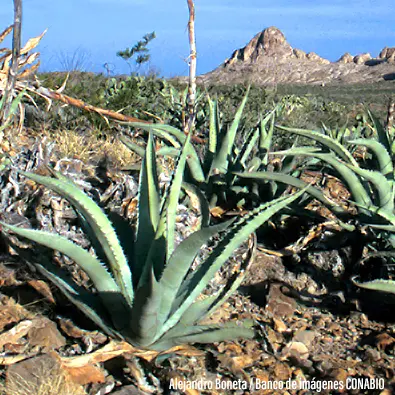
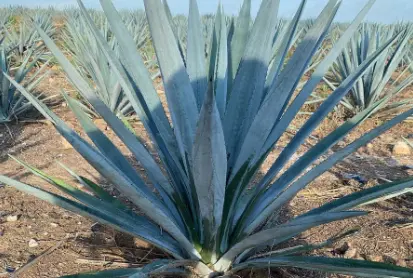
Biomass availability in Mexico constitutes a strategic advantage. Among the most promising feedstocks are agave bagasse from the
tequila and mezcal industry, lignocellulosic residues from sugarcane, waste oils, animal fats and municipal solid waste (Sacramento-Rivero & Güereca, 2025).
These sources allow different conversion routes, either through thermochemical processes such as gasification and pyrolysis, or biochemical ones such as alcoholic fermentation.
New frontiers in the valorization of agro-industrial waste are also being explored. An example is the wine industry of Baja California, whose effluents,
highly polluting, can be converted into SAF, levulinic acid, green biodiesel and high-value coproducts. Through a biorefinery scheme simulated in
Aspen Plus, 99.99% reduction in chemical oxygen demand (COD) was achieved and estimated profits of over 245 million USD annually
(Guzmán-Martínez, Caltzontzin-Rabell, Martínez-Guido & Gutiérrez-Antonio, 2025).
Complementarily, the exploration of sargassum and marine macroalgae in the Mexican Caribbean constitutes an innovative option for the production of bioturbosine,
since these feedstocks capture CO₂ during their growth and solve environmental problems in tourist areas (Super Channel 12, 2025). This diversity of
resources positions Mexico as a country with high SAF production capacity in a circular economy scheme.
Technologies and conversion routes to SAF
SAF development in Mexico is articulated around the technological routes approved by ASTM D7566 standard. Among them stand out: HEFA (Hydroprocessed Esters and Fatty Acids),
from vegetable oils and animal fats; ATJ (Alcohol-to-Jet), using ethanol derived from sugarcane or sorghum; and FT-SPK (Fischer–Tropsch Synthetic Paraffinic Kerosene), based
on biomass gasification and catalytic synthesis (Caltzontzin-Rabell, Reséndiz & Gutiérrez, 2024).
Various life cycle assessment (LCA) studies have shown that SAF produced under these routes in Mexico can reduce CO₂ emissions between 12% and 56% compared
to conventional jet fuel, depending on the feedstock used (Sacramento-Rivero & Güereca, 2025; Ibarra-Lizárraga et al., 2024). Computational modeling using Aspen Plus
has demonstrated the technical and economic feasibility of these routes, confirming that integrated biorefinery processes allow obtaining multiple coproducts and improving
SAF profitability (Guzmán-Martínez et al., 2025).
Environmental and social impacts
The environmental impact of SAF in Mexico must be evaluated from a comprehensive perspective. While the use of biomass and waste allows significantly reducing the carbon footprint,
there are also risks associated with the use of energy crops that could compete with food production and increase pressure on water resources. Research
in tourist destinations such as Los Cabos has identified the carbon footprint of air tourism and the need to introduce alternative fuels to mitigate its impact
(Galindo Fuentes, 2024).
From a social point of view, SAF development presents clear benefits. Among them are job generation in rural communities, the valorization of agro-industrial waste
and the reduction of environmental liabilities. However, social acceptance and community participation are fundamental to ensure that SAF
projects are not perceived as extractive, but as an opportunity for inclusive development (Medina Jiménez et al., 2025).
Economic and investment opportunities
SAF implementation in Mexico not only responds to an environmental need, but also to a business opportunity. According to MIT estimates, the country will require
more than 49 billion USD between 2025 and 2050 to finance SAF production and distribution infrastructure (MBN Staff, 2025). These investments range from
biorefinery plants to logistical systems at airports.
The nearshoring context offers Mexico an additional advantage, positioning it as a strategic hub to export SAF to the United States and Canada. Recent examples include
pilot projects in Tamaulipas, supported by the French Development Agency, which seek to trigger regional value chains around aviation biofuel (Government of Tamaulipas, 2025).
These projects show that the Mexican energy transition is not only technical, but also financial and geopolitical.
Contests, fairs and events in Mexico related to SAF
SAF development in Mexico has also been accompanied by a growing offer of specialized contests and events that promote technological innovation and linkage between academia,
industry and government. According to specialized media, national competitions have been organized to identify innovative biofuel projects, as well as energy fairs where
biorefinery prototypes, circular economy models and investment proposals are presented (Chávez Meza, 2025).
These spaces not only foster collaborative ecosystems, but also function as showcases to attract private capital and international cooperation. By making local initiatives visible,
these contests allow startups, universities and research centers to connect directly with investors interested in Mexican SAF potential. They also fulfill a relevant social
function by disseminating among the population the importance of reducing emissions in aviation and the role of biofuels in the fight against climate change.
Conclusion: Perspectives towards 2050
The Mexican landscape on sustainable aviation fuel reveals a complex but promising scenario. There are abundant resources, a growing body of scientific research and a
regulatory framework under construction. However, high production costs —two to seven times higher than fossil jet fuel— and the need for clear fiscal incentives are barriers that must
be overcome.
Mexico has the opportunity to consolidate itself as a regional leader in SAF production if it can articulate consistent public policies, large-scale industrial projects and innovation incentives.
The key will be to transform waste into energy, link science with the private sector and generate investor confidence. By 2050, SAF can not only contribute to fulfilling climate
commitments, but also become an economic engine that drives the competitiveness of Mexican aviation in the global scenario.
References
-
Coazozon González, Y. V. (2024).
Sustainable Aviation Fuel.
Technical sheet, Directorate of Mobility and Transport, National Commission for the Efficient Use of Energy (CONUEE).
https://www.gob.mx/cms/uploads/attachment/file/939353/Ficha_tecnica_combustibles_SAF24.pdf
-
Becerra-Lopez, H. R., De Silva-Munoz, L., Flores-Hernandez, J. R., Lira-Arguello, R., & Romero-Castanon, T. (2025).
Forecasting regional green hydrogen demand in Mexico by 2035.
International Journal of Hydrogen Energy, 141, 1039–1049.
https://doi.org/10.1016/j.ijhydene.2025.01.132
-
Sadhukhan, J., Martinez-Hernandez, E., Amezcua Allieri, M. A., Zermeño Eguía-Lis, J. A., Castillo, A., Dominguillo, D., Torres-García, E., & Aburto, J. (2024).
Strategic navigation of world-leading biorefineries and Mexico's policy landscape: A gateway to a sustainable circular bioeconomy.
Journal of Cleaner Production, 434, 140386.
https://doi.org/10.1016/j.jclepro.2023.140386
-
Sacramento Rivero, J. C., & Güereca, L. P. (Coords.). (2025).
Life cycle assessment of biofuels in Mexico.
UADY Publishing House. ISBN 978-607-8741-73-1.
https://www.researchgate.net/publication/390466747_El_Analisis_de_Ciclo_de_Vida_de_los_Biocombustibles_en_Mexico
-
Véjares, M., de Gaspi, R. H., Sahay, T., Wang, C., Goldman, J. & Bentley, A. (2025).
Mexico's green industrial policy opportunities in the new geopolitical landscape.
Geopolitical Brief No. 4, Net Zero Industrial Policy Lab.
https://static1.squarespace.com/static/64ca7e081e376c26a5319f0b/t/6824a1eaf4e0fb284b0aab9c/1747231210940/GB04+-+SPA.+Mexico+-+Final.pdf
-
Galindo Fuentes, J. de J. (2024).
International tourism and carbon footprint: Impact of international flights to Los Cabos, Mexico.
HorizonTes Territoriales, 4(7), 1–17.
https://doi.org/10.31644/HT.04.07.2024.A40
-
Reséndiz Luna, J. J., Caltzontzin Rabell, V., & Gutiérrez Antonio, C. (2025).
Production of sustainable aviation fuel from residual lipid materials: a review.
Perspectives of Science and Technology, 8(14), 31–46.
https://revistas.uaq.mx/index.php/perspectivas/article/view/1652
-
López Domínguez, M. G., García De Santiago, D., & Garrido Vega, J. J. (2024).
State of the art on transportation decarbonization in Mexico.
Technical Publication No. 799, Mexican Transport Institute. Querétaro, Mexico.
https://imt.mx/descarga-archivo.html?l=YXJjaGl2b3MvUHVibGljYWNpb25lcy9QdWJsaWNhY2lvblRlY25pY2EvcHQ3OTkucGRm
-
Aburto, J., Martínez-Hernández, E., & Castillo-Landero, A. (2025).
Is sustainable aviation fuel production through hydroprocessing of esters and fatty acids (HEFA) and alcohol-to-jet (ATJ) technologies feasible in Mexico?
Sustainability, 17(4), 1584.
https://doi.org/10.3390/su17041584
-
Medina Jiménez, A., Magaña López, E., Mballa, L. V., & Ibarra Cortés, M. E. (2025).
The transition from fossil energy use to clean energies. A disruptive innovation change?
Scientific Space of Accounting and Administration–UASLP (ECCA), 3(2, Special issue), 141–162.
https://doi.org/10.58493/ecca.2025.3.2.09
-
Guzmán-Martínez, C. E., Caltzontzin-Rabell, V., Martínez-Guido, S. I., & Gutiérrez-Antonio, C. (2025).
Valorization of effluents from the wine industry through a biorefinery scheme to obtain sustainable aviation fuel, levulinic acid, water, and value-added compounds.
Biochemical Engineering Journal, 221, 109798.
https://doi.org/10.1016/j.bej.2025.109798
-
Ibarra Lizárraga, E., Santos Ballardo, D. U., & Ambriz Pérez, D. L. (2024).
From Mexican soil to the clouds: overview of bioturbosine in Mexico.
Natural Resources and Society, 10(2), 65–75.
https://www.cibnor.gob.mx/revista-rns/pdfs/vol10num2/6_DEL_SUELO.pdf
-
MBN Staff. (2025, July 8).
Mexico aims for sustainable aviation fuel by 2030, says CANAERO.
Mexico Business News.
https://mexicobusiness.news/aerospace/news/mexico-aims-sustainable-aviation-fuel-2030-says-canaero
-
Global Energy. (2025, September 4).
Authorities define route to produce sustainable aviation fuels.
Global Energy.
https://globalenergy.mx/noticias/autoridades-definen-ruta-para-producir-combustibles-sostenibles-de-aviacion/
-
González Delgadillo, D. (2025, August 11).
Mexican government's energy plan is to incorporate biofuels: experts.
La Jornada.
https://www.jornada.com.mx/noticia/2025/08/11/economia/plan-enegetico-del-gobierno-de-mexico-es-incorporar-biocombustibles-expertos
-
Agencies. (2025, August 29).
Mexican government explores converting sargassum into aviation fuel.
Super Channel 12.
https://superchannel12.com/675189/Gobierno%20mexicano%20explora%20convertir%20sargazo%20en%20combustible%20de%20aviaci%C3%B3n
-
Gante, D. (2025, July 7).
Jet fuel or SAF? Airlines face high prices to reduce their carbon emissions.
Expansión.
https://expansion.mx/empresas/2025/07/07/aerolineas-enfrentan-altos-precios-saf
-
Gutiérrez, U. (2025, April 24).
Mexico has a roadmap project for SAF production.
A21.
https://a21.com.mx/aeronautica/2025/04/24/cuenta-mexico-con-proyecto-de-hoja-de-ruta-para-produccion-de-saf-2/
-
Valadez, R. (2025, August 27).
ASA will invest 300 million pesos to produce biofuels in Cancún.
Milenio.
https://www.milenio.com/negocios/asa-invertira-300-mdp-para-producir-biocombustibles-en-cancun
-
Calderón Martínez, E. (2025, June 9).
Signing of LOI between Airbus and Volaris, a milestone for sustainable aviation in Mexico.
A21.
https://a21.com.mx/opinion/2025/06/09/firma-del-loi-entre-airbus-y-volaris-un-hito-para-la-aviacion-sostenible-en-mexico/
-
Chávez Meza, P. (2025, July 1).
Santander Mexico opens the door to projects for SAF production.
A21.
https://a21.com.mx/destacado-principal/2025/07/01/abre-santander-mexico-la-puerta-a-proyectos-para-elaboracion-de-saf/
-
Chávez Meza, P. (2025, April 25).
Mexico has feedstocks to make SAF.
A21.
https://a21.com.mx/aeronautica/2025/04/25/cuenta-mexico-con-materias-primas-para-hacer-saf-2/
-
Chávez Meza, P. (2025, June 11).
ASA builds blending plant to store SAF.
A21.
https://a21.com.mx/destacadas/2025/05/28/construye-asa-planta-de-mezclas-para-almacenar-saf/
-
Chávez Meza, P. (2025, June 16).
Bet on SAF production with Furanos to Jet technology.
A21.
https://a21.com.mx/destacado-principal/2025/06/16/apuestan-por-la-produccion-de-saf-con-la-tecnologia-furanos-to-jet/
-
Ayala Espinosa, C. (2025, June 10).
Airports and Auxiliary Services keeps 97% of jet fuel; goes for green fuel.
Proceso.
https://www.proceso.com.mx/economia/2025/6/10/aeropuertos-servicios-auxiliares-se-queda-con-97-de-la-turbosina-va-por-el-combustible-verde-352824.html
-
Claudia Sheinbaum. (2024 - 2030).
100 steps for transformation.
Legislative Directory.
https://alertas-v3.directoriolegislativo.org/pkenu2d3z0v9v27fr73p7cce_CSP100.pdf